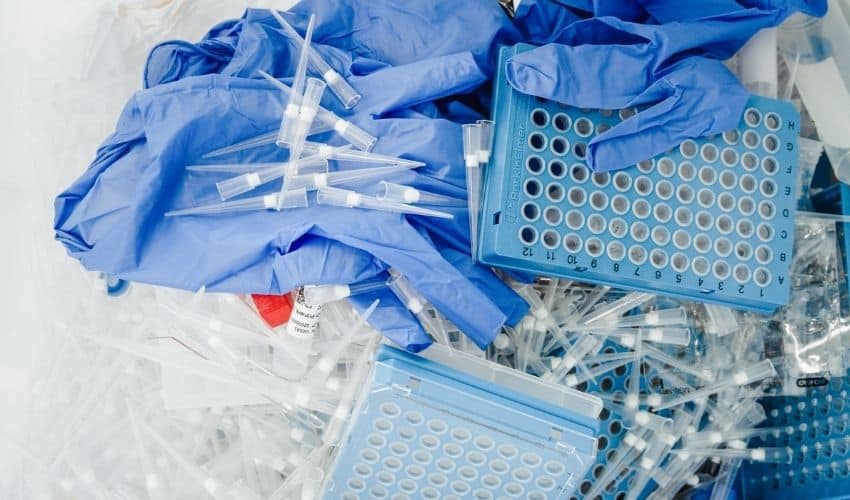
When single-use medical plastics turn into a sustainable opportunity: is it really possible?
Single-use plastics save lives – but at what cost to our planet? In a world where each day brings its share of waste, the medical industry faces a massive ethical and environmental dilemma. How can we reconcile the need for safe healthcare with the urgency of reducing our plastic footprint?
In this article, we explore the challenges, the constraints, and above all, the opportunities to build a more sustainable healthcare system.
1. A global plastic crisis: an invasive problem, even at the patient’s bedside
If plastic were an invasive species, it would rule the jungle. Every year, more than 8 million tons of plastic waste end up in our oceans, turning the seabed into open dumps. By 2050, some predict there will be more plastic than fish in the blue waters of our planet. Charming, isn’t it?
Single-use plastics, leading the list of offenders, are everywhere: practical, disposable — and incredibly polluting. Made from petroleum, both their production and their end-of-life incineration release large amounts of CO₂, worsening climate change. In response, the European Union is trying to push back against this plastic tsunami by promoting affordable and accessible alternatives.
But while global plastic demand continues to rise like a worldwide addiction, some initiatives are showing a possible way forward: 69 organizations across 35 countries are mobilizing through more than 260 projects to curb this growing tide.
Yet amid this bleak picture, one sector remains too often overlooked: healthcare. Hospitals and clinics — where single-use medical plastics reign supreme — present a striking paradox: essential to saving lives, yet devastating for the planet.
What if we started there?
2. Single-use medical plastics: hygiene hero, ecological enemy
In the medical industry, plastic is a true chameleon. Its versatility allows it to meet a wide range of critical needs. Here are four reasons why single-use plastics are indispensable in hospitals:
Disposable devices for greater safety Since their introduction in the 1960s, disposable syringes, intravenous (IV) tubing, and blood bags have eliminated most risks of cross-contamination between patients.
Antimicrobial by design Antimicrobial plastic surfaces reduce the spread of dangerous diseases — a function that proved essential during the COVID-19 pandemic.
Unmatched robustness PVC blood bags, introduced as early as the Korean War, revolutionized healthcare by offering robust and reliable solutions in extreme conditions. Even today, drones deliver these bags to remote regions of Rwanda.
Innovation at every level From personal protective equipment to high-tech diagnostic devices, plastic underpins countless life-saving innovations every single day. Not to mention its role in computer-controlled medical equipment — technologies set to play an even greater role in the future.
Improved access to healthcare The introduction of affordable plastics, particularly PVC, in the 1960s played a decisive role in expanding access to safe, quality healthcare. As global populations grow and healthcare demand increases, the cost–benefit efficiency of plastics remains critical for the future of medical care.
But let’s be honest: this picture isn’t all rosy. Most single-use medical devices, while theoretically recyclable, still end up in landfills. Although a growing number of hospitals are implementing PVC recycling programs, these initiatives remain marginal compared to the sheer volume of waste generated.
As access to quality healthcare continues to expand worldwide, demand for affordable and safe solutions is exploding. Plastic remains essential – but it must evolve.
So how do we reinvent this material for a sustainable medical future?
3. Between ontamination and confusion: the real challenges of medical recycling
Contamination: a major barrier to recycling
Medical plastics are often contaminated with biological fluids, chemicals, or other hazardous substances. The result? Recycling becomes both costly and technically challenging – especially in high-risk areas like operating rooms. Even in low-risk zones like hospital cafeterias, logistical constraints often make efficient sorting difficult.
Mixed and incompatible materials
A medical plastic device isn’t “just plastic.” These products often combine multiple types of polymers, making them nearly impossible – or financially unviable – to separate. As research shows, the molecular incompatibility of different plastics seriously complicates their transformation into new resin materials.
Lack of recyclable volume
To be economically viable, recycling systems require a critical mass of homogeneous materials. But in hospital waste streams, this consistency is rare. Most of these plastics, due to lack of scalable solutions, end up in landfills or are incinerated.
Confusion over labeling
Think that little green triangle means your plastic is recyclable? Think again. Without a globally harmonized system for plastic identification, confusion runs rampant. Some systems, like the Chinese standard with its 140 precise resin codes, offer clarity, but they remain rare exceptions.
Inadequate infrastructure and inconsistent sorting
In many countries, existing infrastructure simply isn’t equipped to process medical plastic waste properly. Even with local sorting initiatives or take-back systems – like Germany’s deposit model – the gap between what we generate and what we can process is still massive.
Reducing single-use medical plastics in hospitals isn’t just a technological or financial issue. It’s a global puzzle — one that demands collaboration across governments, industries, and end users.
So where do we start?
One thing is certain: the solution isn’t hiding in the cafeteria bins — it begins upstream, at the design and manufacturing stage of medical devices.
4. Opportunities for single-use plastics: toward a circular revolution in healthcare
Despite the many challenges linked to single-use plastics in the medical sector, there are real and promising opportunities for a sustainable shift. Moving away from a linear model – consume, discard – to a circular economy depends on innovation and coordinated policy efforts.
Innovating in materials: from concept to reality The future of plastics lies in biodegradable or fully recyclable materials. Imagine polymers that can be reused or repurposed without quality loss, or reusable devices that maintain the same safety standards. These innovations, already underway in certain labs, pave the way for healthcare that’s both high-performing and environmentally responsible.
Adopting a circular mindset: the German model as inspiration Germany’s deposit system for plastic bottles is a powerful success story – so why not apply it to medical plastics? In Germany, single-use drink containers like soft plastic bottles or soda cans are subject to a higher deposit fee of €0.25. A similar model could incentivize recovery and recycling of plastic medical components.
Prevention over cure: starting upstream Reducing plastic waste starts with better product design. Why triple-wrap a single syringe in three layers of plastic? Smarter practices – like accurate needs forecasting and streamlined packaging – can significantly cut down on unnecessary plastics, all while maintaining patient safety.
Making policy work: the power of incentives The European Union is setting the tone by promoting eco-friendly practices. Subsidizing sustainable materials, standardizing plastic labeling to eliminate confusion, and enforcing clear regulations could completely change how medical plastics are managed. But without strong political will, these proposals will remain theoretical.
Training and awareness: mindset shifts for real change Transitioning to sustainable healthcare also requires educating professionals. Giving staff the tools to understand and act on environmental challenges in their daily work is critical. And why not include patients in the conversation? An informed public is a powerful driver of change.
5. Conclusion: practical paths forward
Single-use medical plastics won’t disappear overnight – but viable solutions do exist to minimize their impact. The medical industry can start shifting toward a more sustainable model by:
Embracing alternative materials that are recyclable or biodegradable
Promoting circular practices such as recycling and safe reuse
Focusing on education and awareness for both healthcare professionals and the general public
Ultimately, every business, every hospital, has a role to play. Together, we can turn this challenge into an opportunity – and reimagine healthcare to be as respectful of the planet’s health as it is of human health.
Want to explore what this transformation could look like for your organization? Let’s talk.