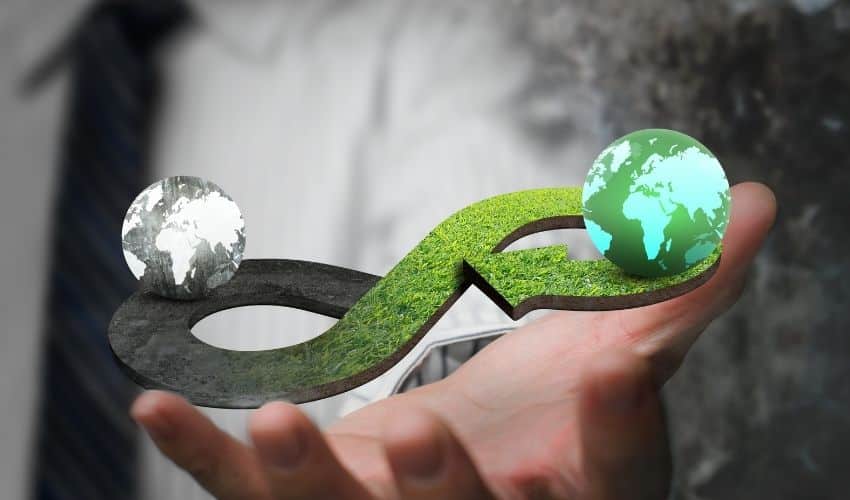
What if applying the circular economy could turn your waste into opportunities?
The circular economy isn’t just another green buzzword. It’s a revolution in how companies design, produce, and use resources. Are you tired of hearing about “sustainable development” without knowing where to begin? In this article, you’ll discover concrete strategies, practical tools, and real examples that will help you transform your business while strengthening its positive impact. Promise: no fluff, just solid guidance.
Ready to implement circular economy concepts in your organization?
1. Understanding the circular economy: a new vision for resources
The circular economy (CE) opposes the traditional “take‑make‑use‑dispose” model. In this approach, resources are optimized to stay in the system as long as possible. Think of it as a closed loop: recovery, reuse, and recycling replace linearity. For example, instead of throwing away your packaging, why not turn it into raw materials for your next products?
Real‑world example: In Sweden, repair centers supported by tax incentives are giving new life to household appliances. The result? Resource savings and the creation of local jobs.
2. Why implement circular economy in your industry?
The term “circular economy” has been part of European political discourse for at least the past decade—and for good reason! It is expected that this economic model will boost economic growth by creating new businesses, new types of jobs, and employment opportunities; lowering material costs; reducing price volatility; securing supply chains; and at the same time decreasing environmental pressures and impacts.
Here are the key anticipated benefits:
Cost reduction: Reusing materials can lower procurement expenses.
Regulatory compliance: The European Union is progressively imposing standards that favor circular practices.
Key figures : According to the European Commission, improving resource productivity by 30% by 2030 could generate €600 billion in savings and create 2 million jobs. (Worth noting: as of January 2022, Europe had approximately 13.6 million unemployed people.)
3. Rethink product design with sustainability from day one
Every product starts with an idea, and with its design. Adopting circular design means building in principles of sustainability, modularity, and recyclability right from the beginning.
Example: The “design for disassembly/recycling” strategy focuses on creating products that are easy to take apart, making them easier to repair, reuse, or recycle. Think modular furniture or electronic devices where components can be easily replaced.
Smart design is the first step toward reducing environmental impacts, while meeting the expectations of increasingly eco-conscious customers.
4. Leverage industrial synergies to cut waste
Companies can collaborate to turn their waste into valuable resources for other players. This principle, known as industrial symbiosis, helps reduce costs and lower the overall carbon footprint of your operations.
It’s based on the 4R principle: Reduce, Reuse, Recycle, Recover. The goal? Maximize the lifespan and value of every resource used.
Example: A factory can share its by-products—such as organic waste or metal scraps—with another facility that uses them as raw materials. This is exactly what’s been happening in Kalundborg, Denmark, where an industrial park has been applying this model successfully for over 40 years.
Cross-industry collaboration is a powerful way to bring circular practices into your value chain, and to create shared value across sectors.
5. Optimize materials used in production
Reducing the quantity of materials required, or switching to more sustainable alternatives, not only improves economic efficiency but also strengthens your resilience against resource shortages.
Example: The material substitution strategy involves replacing rare or polluting materials with more accessible and eco-friendly options, such as using bio-based plastics instead of petroleum-based ones.
Choosing better materials is a good way to inmplement circular economy in your production. Indeed, it supports more eco-responsible production and lowers long-term costs.
6. Introduce innovative business models like product-as-a-service
Shifting from a traditional ownership model to a usage-based model (product-as-a-service) can extend product lifespan and reduce overconsumption.
Example: With a Product-as-a-Service strategy, companies retain ownership of their products while offering them for rent or subscription. This allows them to recover items at the end of their lifecycle for refurbishment or recycling, as seen with Philips’ industrial lighting services.
Changing your business model can unlock new revenue streams and build stronger customer loyalty.
7. Invest in advanced recycling technologies and infrastructure
To implement circular economy strategy effectively, you need the right infrastructure to collect, process, and recycle products at the end of their life.
Example: The high-quality recycling strategy focuses on recovering materials in a clean, uncontaminated state, allowing them to be reused in the production of new, high-grade products. This ensures a steady and reliable supply of recycled materials.
Robust infrastructure is key to closing the loop on material use, and making circularity work at scale.
8. Integrate tracking tools to measure your progress
Adopting monitoring solutions, such as Material Flow Analysis (MFA), helps quantify your circular efforts and identify areas for improvement.
Example: The Hybrid MFA-LCA method combines material flow analysis with life cycle assessment to provide a comprehensive overview of both resource use and environmental impact.
The right tools help you stay aligned with your circularity goals, and demonstrate the effectiveness of your strategy to stakeholders.
9. Raise awareness among customers and partners
A circular economy only works if all actors in the value chain are engaged. Educating your customers about the impact of their choices and encouraging your partners to adopt similar practices is essential. Applying circular economy principles will inevitably affect your stakeholders, and that’s a good thing.
Example: Implementing eco-labeling allows you to communicate the environmental characteristics of your products, helping consumers make more informed decisions.
Ready to transform your value chain with circular economy strategies? Don’t stay on the sidelines. Take action by analyzing your material flows, rethinking your product designs, and collaborating with partners. Contact a CSR consultant to build a custom, actionable roadmap.